
SOLO REVIEW
I want to start by being very clear that this review is of the SOLO version of Margot La Fée. I have not played the game multiplayer and as of writing this, I don’t expect I’ll have the opportunity to play it multiplayer any time soon. If I do eventually play this again, I’ll most likely do a second review because I feel like the game might play better that way than as a solo game. So with that out of the way…
Margot la Fée could very loosely be interpreted as, or derived from, The Flower Fairies in French. Margot, the name, is a diminutive of Marguerite. Marguerite also translates to Daisy, the flower. La Fée is just The Fairies. Margot la Fée is also a generic term for some fairies in parts of France. As an arrogant English speaker, it has always been odd to me how much French language and culture has made its way into Japanese pop culture. The more I think about this in context of the game, the more examples I’m coming up with outside the game, but I’m going to try to ignore that. However, the Western influence on this game is unmistakable.
There are four decks in Margot. Two Castle decks and two Fairy decks. The goal of the game is to search the Castles using the Fairies you rescue, finding Fairy Tales and hopefully avoiding the human denizens of the castle. Both Castles have Soldiers, Knights, a Sorceress, and a big-bad. Ranvel Castle is home to the Unyielding King and the Witch’s Castle is home to (wait for it…) a Contemptuous Witch. On the Fae side of things, there is a Tome of Legends, Portrait of Paradise, Fae Melodies, and a special weapon. The Fairytale Sword found in Ranvel Castle counters the Witch, while Vivian’s Wand counters the King. Each of the Fairytale items (Including the specials) provides a different colour of fairy magic that can be spent – or “disenchanted” – to rescue one of the three revealed Fairies in the “Fount of Recollection” or an always-available Flower Fairy.
The game ends when the player has 24 points or has rescued six Fairies. It also ends if the Flower Fairies run out, but that’s impossible in a solo game. Getting 24 points in a solo game would require either very good luck or very intentional planning. So you can basically choose how you want your solo game to end, but it’s actually near-impossible to lose. The main mechanic of Margot is push-your-luck, as you reveal cards (right to left, Japanese style) from either Castle deck. If you reveal five wounds worth of human characters, your action ends immediately. Then you disenchant one Fairy Tale you have revealed, and other players each get a Victory Point. After that, you still perform your Rescue phase, so losing access to that single card – and there being no other players – means all that really happens in a solo game is that you get delayed a little. Oh no. Not that. (If I wanted to be scathing, I’d say that prolonging this as a solo game is the worst penalty of all. But I don’t know if that’s really fair to say.) At the end of your turn, you shuffle the revealed cards into their respective Castle Decks. If it were a multiplayer game you’d then pass the castle decks to the next player.
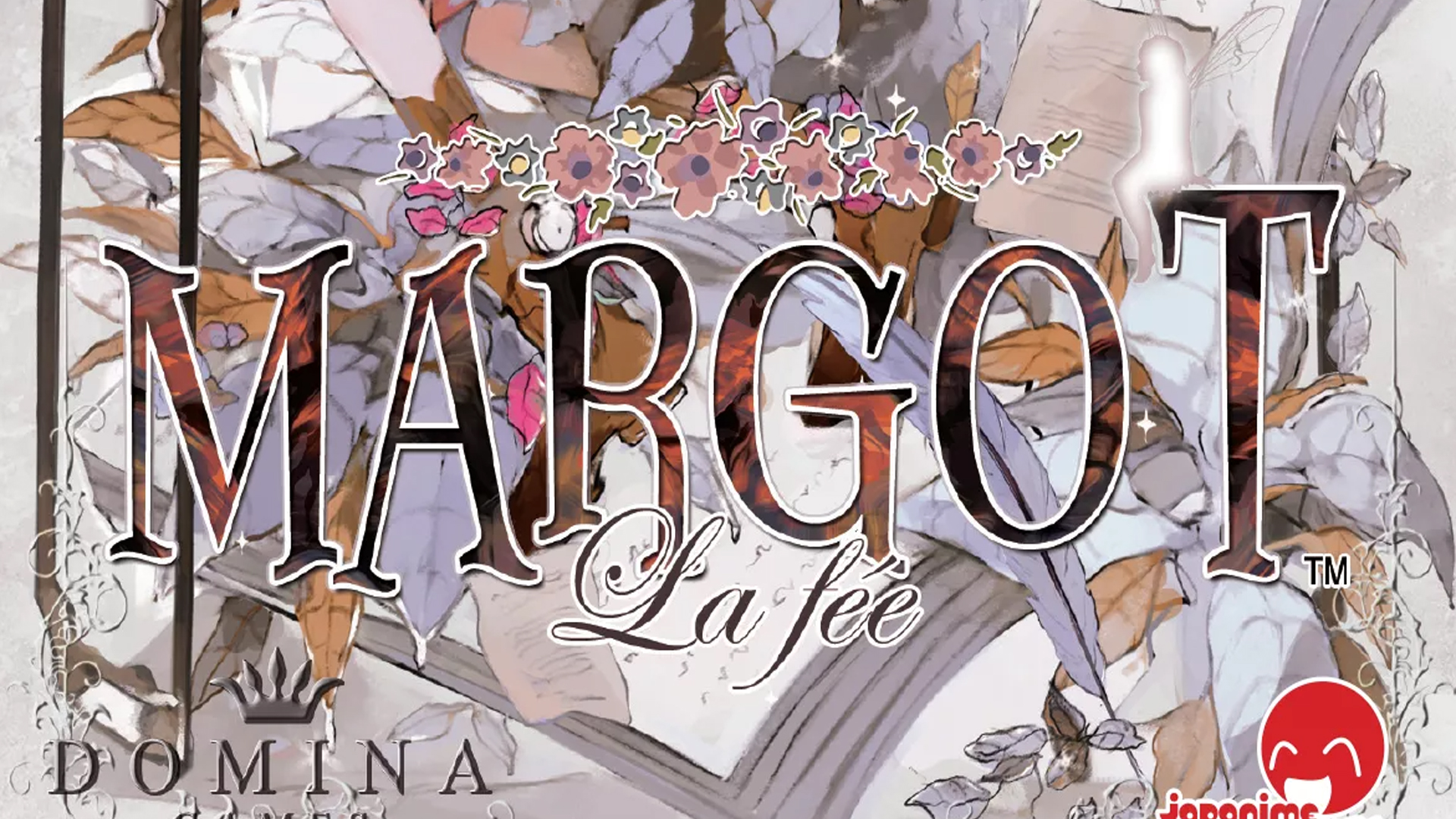
On the positive side of things, I adore the artwork. The fae are beautifully drawn in a muted, almost watercolour, pallet, while the humans are much deeper and darker in colour. This does a great job separating the Human and Fae worlds. Unfortunately, that’s where the artistic development ends. The Knights, Soldiers and Sorceresses use colour-swapped versions of the same art, and the Fairy Tales don’t even bother going that far. Having unique Fairy Tales and separate human artwork would go a long way in making this game feel less like a first draft and more like the second published edition that it is. Even on the back of the Fairy cards and box, the beautiful art muddles the words on them. I’ve been trying to get this game played for way too long, and never once noticed the “La Fée” in the title until I started looking more carefully.
Even with other players the game is best described as a multiplayer-solo game, but it should never have been labelled as 1-4 Players. As a single-player solo game, it’s just not good as anything more than a learning tool. To be fair, however, it’s not so bad that I won’t try to play this as a multiplayer game if the opportunity arises. I have previously loved the Domina Games series that Japanime Games has released. But Margot La Fée has so far been a miss for me.

You can find Domina Games website at www.dominagames.com and on Facebook at facebook.com/domina.jp (but both are in Japanese).
Japanime Games is online at japanimegames.com or on Facebook at facebook.com/JapanimeGamesnned. Would the rescue team have been facing Antarctic werewolves if I hadn’t been there?