
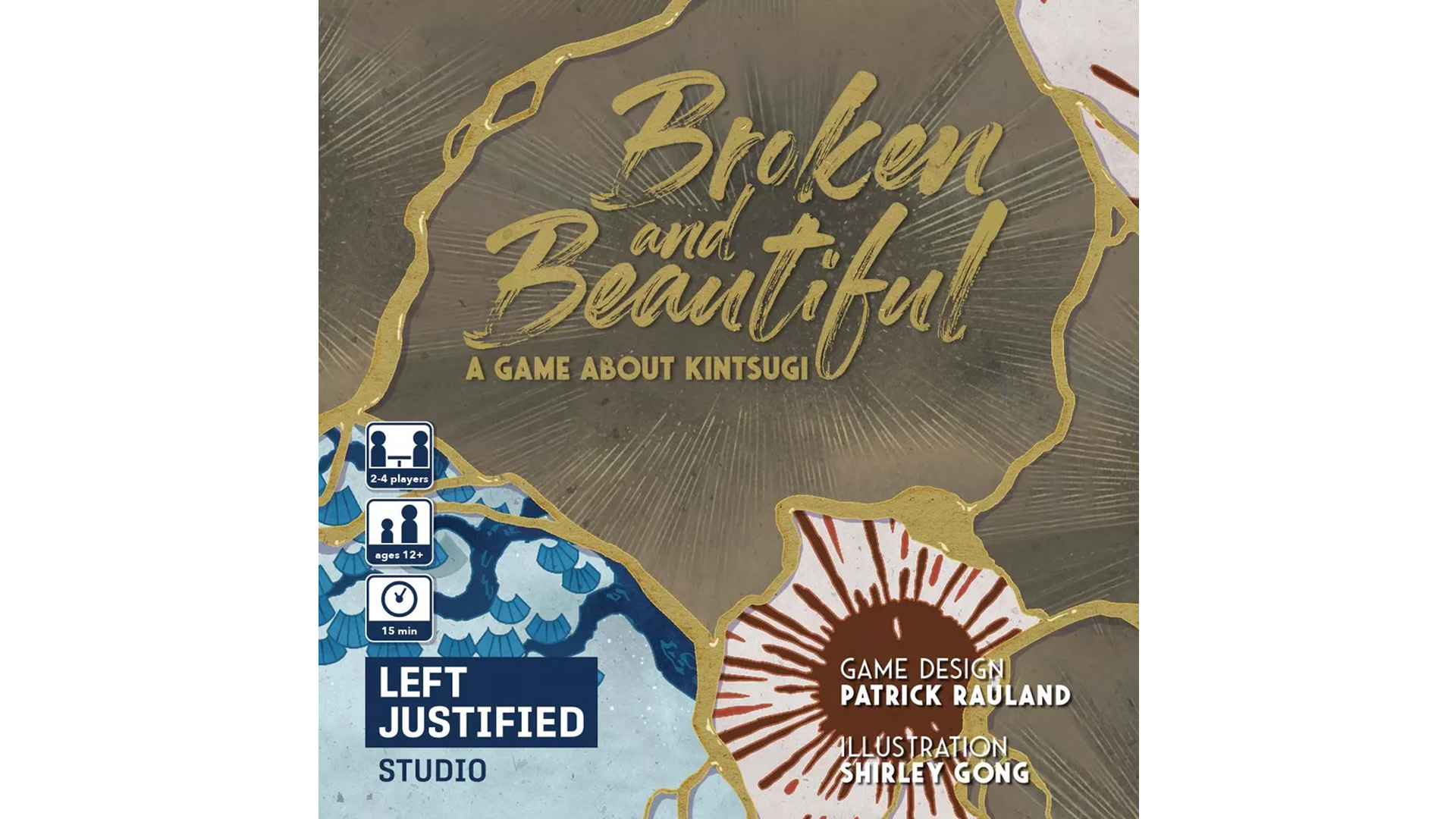
Have you ever heard of Kintsugi? Kintsugi is the Japanese art of repairing broken pottery using gold as glue. More commonly, in modern times, it uses varying qualities of gold lacquer instead of actual gold. The use of modern materials has allowed the art form to flourish at a time in the world where it could have just as easily disappeared. The philosophy behind kintsugi is as beautiful as the finished products and it applies to people just as much as it does pottery. A piece of pottery is a beautiful thing. Beautiful things can be broken, but that doesn’t mean they should be discarded. Rather, they should be celebrated and repaired. The repaired object comes out of the process just as beautiful as before, but also comes out of it as something even more special in its uniqueness. If only we treated people in the same way, helping them heal and celebrating them for their unique qualities.
Broken and Beautiful doesn’t wax philosophical about kintsugi, so don’t worry. But it does take the physical process and creates a game as beautiful as the real thing. It is a fast moving set collection game for 2-4 players.
Each type of pottery scores differently. Wooden pieces never break, but never change how they score. Saucers multiply paired cups. Plates score as a pair. Bowls multiply exponentially. Tea Jars score by who has the most. Tea Pots score according to the number of the matching pottery pattern a player has. Broken pottery pieces are worth nothing and don’t count as part of any set. Repaired pottery is worth more than the original unbroken pieces. That’s a lot of different scoring, but most players will learn them really quickly, and the game moves fast enough that you’ll have a new game to implement your newly learned scoring strategy in no time.
Even though the time listed is 15 minutes (which is pretty accurate), the end of the game sneaks up on you the first few times. Each round you place out two cards per player, plus one, leaving the top card of the deck face up. Players then draft two cards, leaving one card and the face up deck. These two cards indicate what pottery types will break that turn, and then they get discarded. So, if a cup and saucer are left, all cups and saucers break. (Repaired items don’t break again.) Finally, players can spend gold to repair broken items. Gold is gained either by collecting gold cards or by discarding pottery cards instead of collecting them.

At the end of the day, Broken and Beautiful is a pretty straightforward set collection game that is super fun and plays super fast. I streamed a game of it with Mel’s Boardgame Room, and with teaching and chit-chat chat it only took 20 minutes. It’s the perfect length to play while waiting for the rest of a group to arrive or as a palate cleanser between longer games. So if that’s the sort of thing you might be looking for, this is the game for you.
You can find Left Justified Studio online at left-justified.com or on Facebook at facebook.com/LeftJustifiedStudio.