
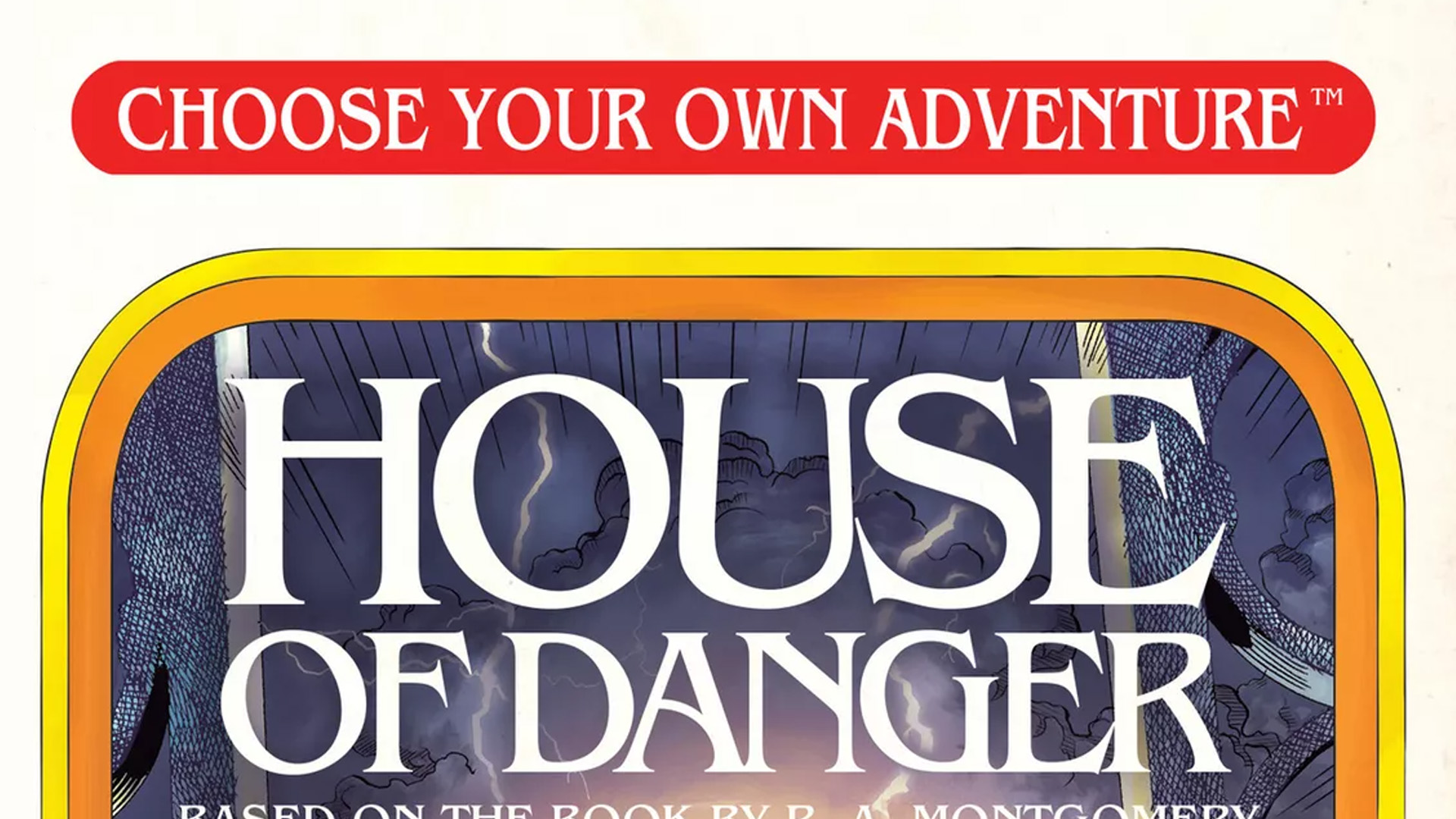
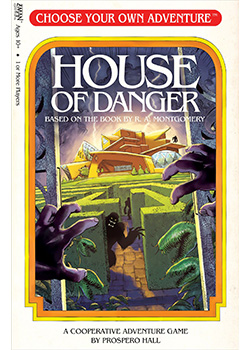
There’s a certain age of people who grew up reading the original Choose Your Own Adventure books. It was one of the most popular book series of the 80s and 90s and has been translated into 40 languages. After 184 books, the series was discontinued in the late 90s, thanks in part to increased competition from advances in computer gaming. After some shennanarchy with the rights, the series returned in the 2000s, and in 2018 Z-Man Games released House of Danger, based on the book by R.A. Montgomery. (#15 in the original CYOA series, released in 1984.)
Discover a thrilling adventure investigating criminal activity and a dark history in your town. Haunted by the mystery of the missing owner of the Marsden mansion, you decide to take the case on yourself. With your psychic senses and skills as a detective, you’re confident you can solve it.
Explore the mansion and unravel its secrets. Cross paths with ghostly figures, navigate a secret lab, and conquer challenges. Think carefully as you choose which paths to investigate. What will YOU choose?
That’s the description from the Z-Man Games website. It’s as spoiler-free as it can get. If you want the game “spoiled,” I streamed all five chapters on TheRatHoleDOTca YouTube channel, but there are multiple endings and lots of things I didn’t accomplish while playing. So you can watch the stream and still enjoy the game if you play for yourself.
As I mentioned, the game is divided into five chapters. Each chapter takes between 30 and 60 minutes to play through, depending on your choices and how completionist you want to be with clues. When you achieve a chapter goal, you are given the opportunity to increase the Danger Meter and go back to explore the chapter more. But that just means you have more opportunities to die, right? Nope. Well, technically yes. BUT that brings up another thematic mechanic. Way back when, when people read the CYOA books, it quickly became common practice to go back to the page you were on before you died in the book. Everyone just did it. Z-Man Games replicated this practice in the game. You can still come to an unfortunate end, but the game itself does not end. You simply take a penalty and return to the previous story card to carry on playing. This is very much in the spirit of Choose Your Own Adventure, but it does mean that you can never actually lose the game.
I’m torn about how I feel about that. On the one hand, it was very useful while streaming the game. (See link above.) On the other hand, is it really a game if there are no stakes? On the first hand again, I like playing games with a story, to experience the story. Groups with younger players may prefer this too because you still experience the consequences of your choices (with an abrupt death), but you still get the experience of playing.
At this point, you may be wondering what the difference is between the game and the book. Now, to be clear, I haven’t read this CYOA book, and it’s been a long time since I’ve read any CYOA book. So I’m answering this based on general experience and a bit of research. The biggest difference is length. The game vastly expands the story. The original books were written with a 7-14 year old audience in mind, and were fairly simple. The game has a recommended age of 10+, but there is an expectation that it will likely be played by adults. With that in mind, the plotline(s) have significantly more weight than in the book. The book makes up for its simplicity with a greater variety of endings. The endings come faster, so they can fit more of them into the page count.
The other significant difference is interactivity. In the books, you make a choice, turn to a page, make a choice, turn to a page. The game interrupts this with challenges. Fight a guy, do a thing, etc. Challenges are a straightforward dice roll with a goal higher than the current Danger Meter number. Often, if you succeed, you’ll draw a specific Clue Card. These Clue Cards may move the story forward, may lead to another Clue Card, or may give you an item to keep for later. Some of these items can give you bonuses in certain types of challenges. As the game progresses, the Clue Cards you have become a challenge in itself. (If you have Clue X, then Y happens.)
The other thing that challenges impact is the Psychic Meter. Many successful challenges increase your Psychic Meter, while it is reduced when the Danger Meter gets too high. Often, you will get to draw a specific Clue Card if you are at a certain psychic level. This is another way the game adds to the replayability, since you won’t always be able to gain the same cards every game.

I’m going to be completely honest here. When I started to play House of Danger, I was skeptical. I expected I’d stream one chapter of it and be done with it. But nope, the story was so wild and weird that I was hooked. Where you start and where the story ends are COMPLETELY disconnected, in the best way possible. You’d never in a million years predict where this story is going until you get there. It plays exceptionally well as a solo game. As a group game, it is much more dependent on the group. It’s ultimately a multiplayer solo game, where one person reads a card, then the next person reads a card, and so on. But I’ve played in many groups where there are one or more players who would hate being put in that situation. That being said, my sister’s family absolutely adored playing this together and wants to play more games just like it.
While there is some replay value to this game, it’s more likely you’ll play through it once or twice and then lovingly pass it along for someone else to enjoy. It comes in at a reasonably low price point, so even a single playthrough is likely worth the investment. Unlike some games, you’re going to spend less on this than you will on a movie date. So why not take the plunge?
You can find Z-Man Games online at zmangames.com or on Facebook at facebook.com/ZManGames.
[David Chapman]